Chapter 1
A bloom of diversity
In the beginning, there is an explosion of plants. Mosses and lichens blanket every stone beneath the thickets of grass. Cinquefoils tower over everything in tall, spindly bunches. With unclaimed, fertile soil in every direction, the grasses and flowers spread from shore to shore. The crickets follow suit and the hamsters aren't far behind. Within the thousands of years to come, changes are immediate.
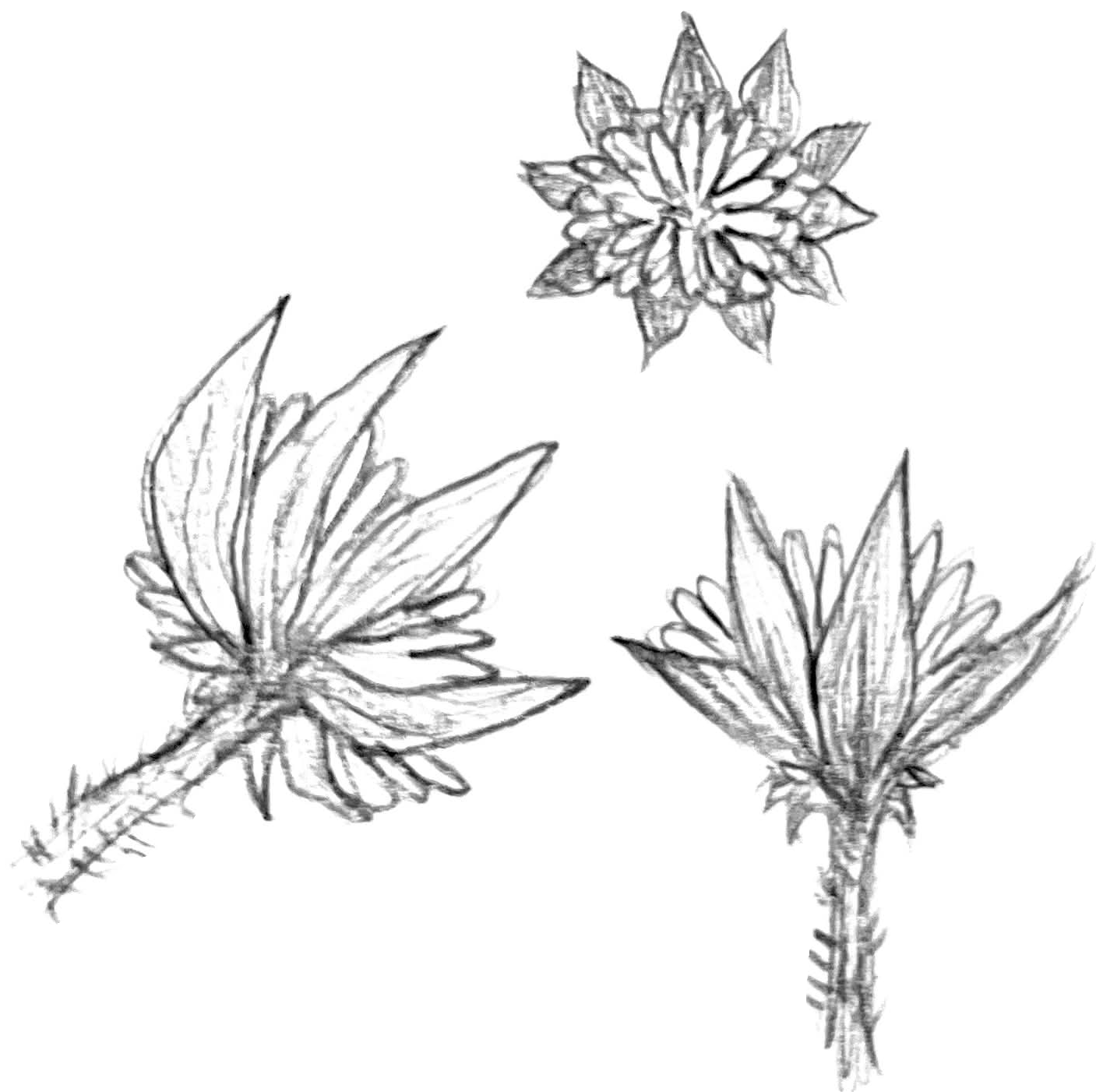
Some plants grow tall and sturdy. Without nectar-drinking insects to pollinate them, some of the flowers start to evolve towards different forms of pollination. The cinquefoil splits off a new species which utilizes the wind. Its flowers have shrunk and become less colorful, opting to sprout in small clusters rather than in a singular golden blossom. The dandelion grows large leaves around the flowerhead in order to protect it from snowfall.
Both insects and hamsters triple in size. This phenomenon is called island gigantism. In 1973, a mammologist on Earth named J. Bristol Foster studied the differences between two different populations of the same species: ones that lived on a mainland and ones that arrived on an island. To his surprise, many prey animals (especially rodents!) became larger in size.
BBeing small is advantageous for hamsters on Earth. They can quickly slip out of sight from the falcons soaring overhead and the foxes prowling the surrounding brush. With no predators on Phodopolis, however, bigger is better! Larger hamsters are more successful at collecting food and defending their territory from intruders. No longer will these animals be considered dwarf hamsters!
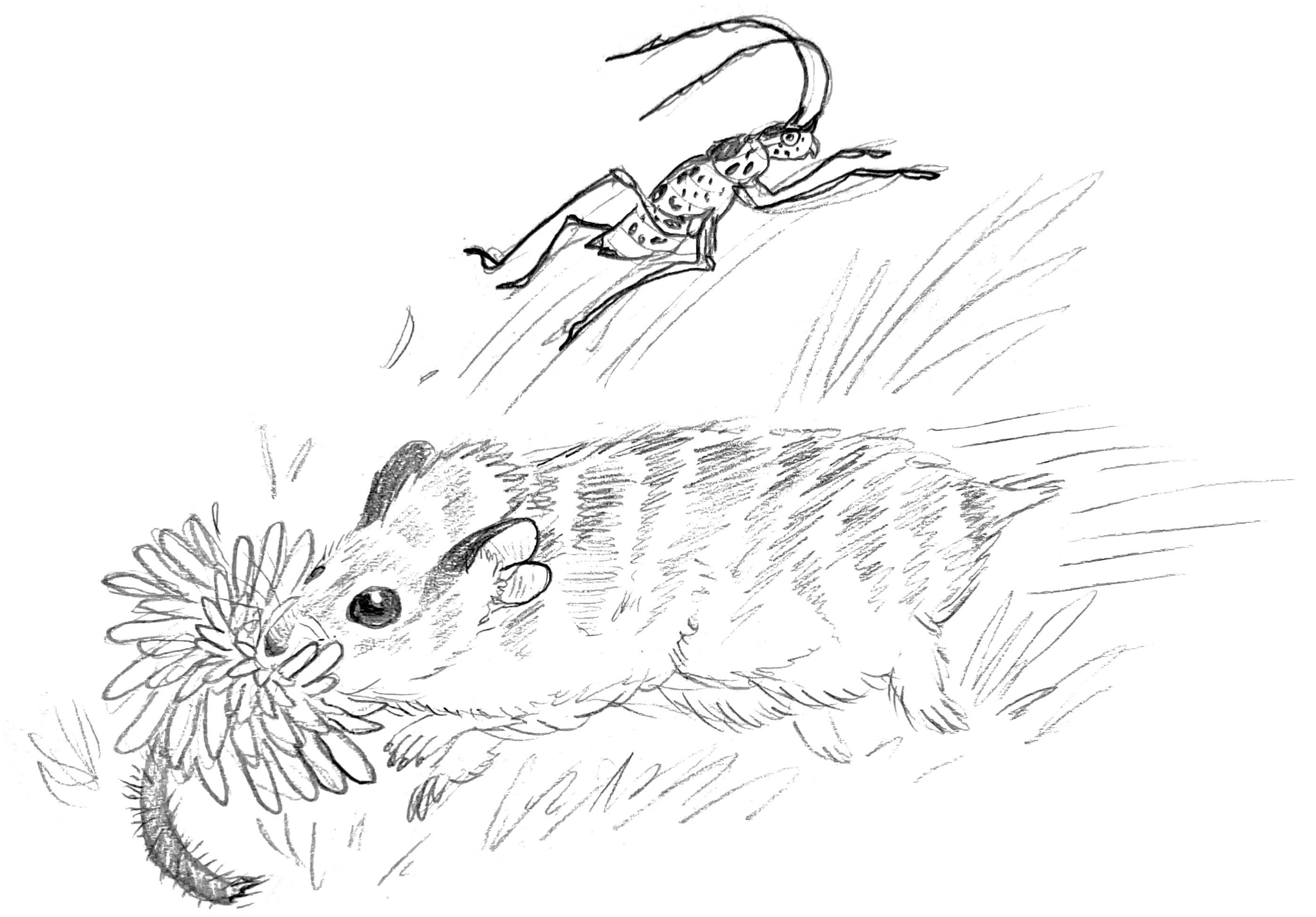
In response to the boom of plant-eating animals, the foliage are pressured to adapt. Both the dandelions and cinquefoils develop a thick layer of hairs over their stems and leaves to protect themselves from hungry insects. This has triggered two very different reactions in the crickets. While some crickets grew so large that they could easily break out of the tangling hairs, some have shrunk considerably. These tiny crickets are able to navigate through the fuzz.
On Earth, the speckled bush-cricket have vestigul wings that are too small to fly with and are, instead, used to attract mates with a barely audible song. On Phodopolis, some crickets have lost their wings entirely! They have adapted an interesting mating strategy called satellite behaviour. These silent crickets seek out singing crickets and hang around, intercepting potential mates that reply to the songs.
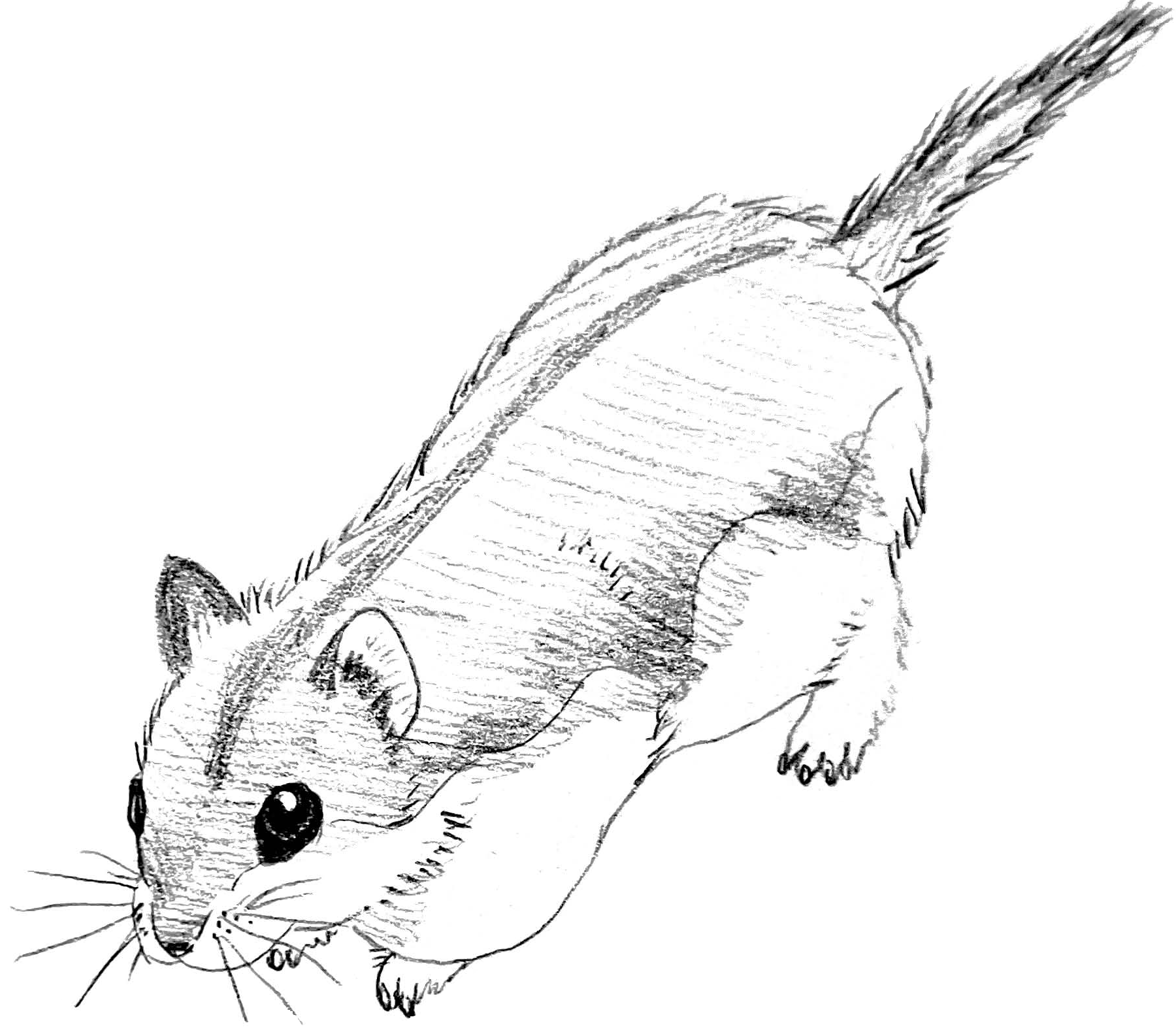
It takes a long time for a species that was once prey to rid itself of those instincts. Despite being at the very top of the food chain here on Phodopolis, the hamsters continued to act as if they were not. At every unusual sound, they froze. At every unknown smell, their heart rates soared. They stuck beneath the cover of dense foliage, out of sight, as if something would snap its claws around them should they ever scamper out into the open. But, as time moves on, the feeling of safety sinks in and their instincts as prey begins to wane.
The hamsters begin to lose their specialized skills. Most of them will still burrow to protect themselves against the weather and cold temperatures, but their burrows are much shallower and lack complexity. With less need to store food, their cheek pouches shrink in size. Their stubby tails, the perfect length for burrowing, grow longer! Mutations that would normally get a prey animal eaten up quickly are passed on through generators.
One mutation that cropped up gives the hamster a fuzzy tuft of fur atop its head! This harmless genetic trait has also been discovered on Earth and nicknamed the pappus mutation by hamster breeders in the Netherlands and Asia. A more surprising development, however, is auricular polyotia! This is a mutation that gives the hamster a second pair of ears! The extra ears don't add or take away from the hamster's ability to hear. There is also a growing population of hamsters who are born without eyes, a mutation called anophthalmia. Since hamsters already have poor eyesight, being completely blind doesn't seem to hinder them at all.
All of these animals boast a variety of unusual colors and bold, striking patterns. Soaring over the top of Phodopolis will reveal a brilliant sight below. For the first and only time in its history, the animals are more colorful and eye-catching than the fields of flowers surrounding them.
Finding your niche
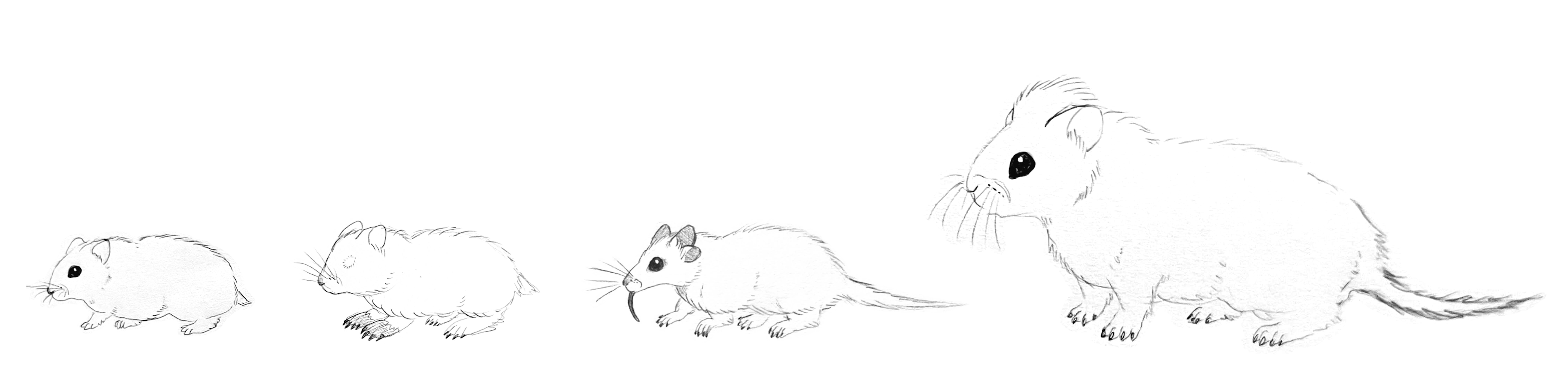
On the rolling knolls covered in tussocks of grass, we find a large, stocky hamster with a fluffy crest of fur between its ears. This is a tufted hamster (P. cristatus), a new species that has found much success on Origin.
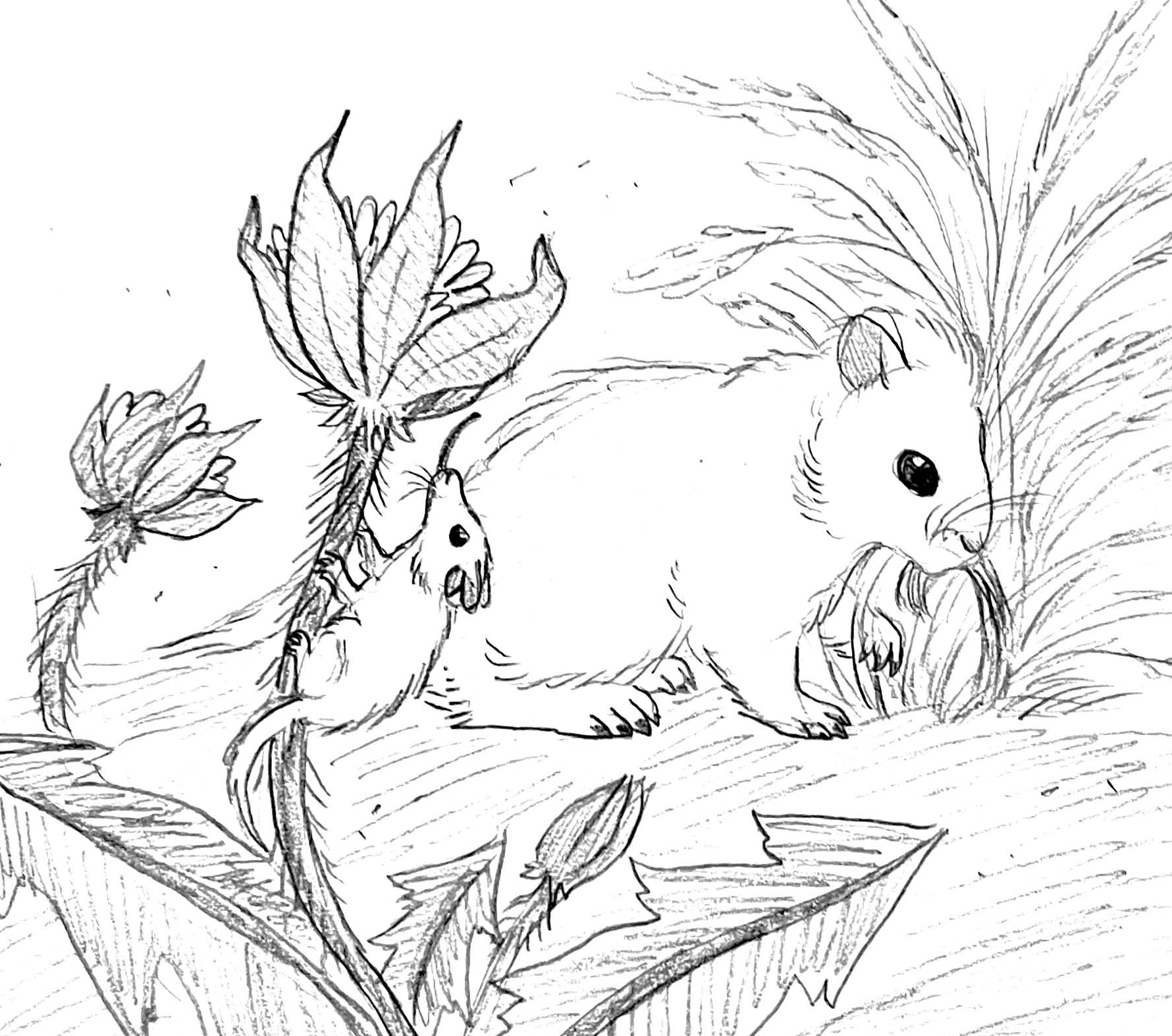
It snuffles around the open hill, grazing on the fresh grasses. Its cheek pouches are much too small and fragile to store such large, thick blades of grass. It isn't bothered by that, thankfully, because it lost the instinct to do so thousands of generations ago. Like a rabbit, it has two pairs of upper incisors and an extra set of molars to help it grind down plants; a lucky mutation that its distant ancestors passed on.
On the opposite side of the clearing, a different species from the same ancestor scales up a flower stalk. It worms its pollen-smeared muzzle between the petals and laps up the sweet nectar inside with its long tongue. The pollen clinging to its fur rubs against the flower's stigmas, ensuring it will produce plenty of seeds in the coming weeks.
This is the long-tongued hamster (P. lambous). As more competition arose and food grew harder to find, its ancestors began to seek out food sources that other hamsters neglected. Its long tail sturdies it as it navigates back down the stem. It roots through the plant hairs in search of tiny crickets to slurp up. The ground beneath its favored plant is littered in droppings which will go on to fertilize it.
Extant Species
Mammals:
- Campbell's giant hamster (P. campbelli maximus)
- Tufted hamster (P. cristatus)
- Long-tongued hamster (P. lambous)
- Blind hamster (P. nulloculus)
Insects:
- Starry bush-cricket
- Satelite bush-cricket
- Tiny hair-cricket
Plants:
- Silver feather grass
- Greater dandelion
- Common dandelion
- Claw dandelion
- One-flower-forest
- Sulfur cinquefoil
- Hydra cinquefoil