Tufted hamster (Phodopus cristatus)
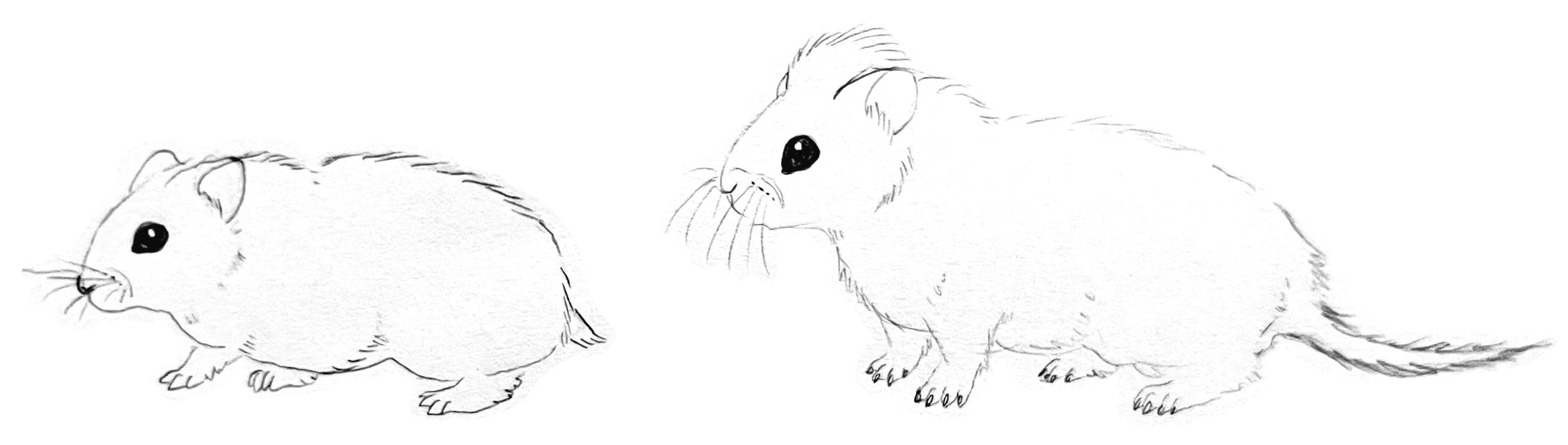
The tufted hamster is a descendant of the Campbell's dwarf hamster. Its species diverged sometime ~12,000 years post-seeding. It is endemic to the steppes and plains of Origin island.
Description: Reaching about 20-30 centimeters in length and 930-1,400 grams in weight, the tufted hamster resembles a large Campbell's dwarf hamster with slightly longer legs, bigger jaws, a thicker pelt, and a longer tail. As its name implies, it has a fuzzy tuft of fur sticking out of the top of its head.
Males are larger than females. They can be found in a variety of colors, such as gray, brown, tan, and white. The pelt will usually have white mottling.
Unlike the Campbell's dwarf hamster, it has an extra pair of upper incisors directly behind the first, as well as an additional pair of molars on both the top and bottom rows. This allows it to consume more tough and fibrous plant material.
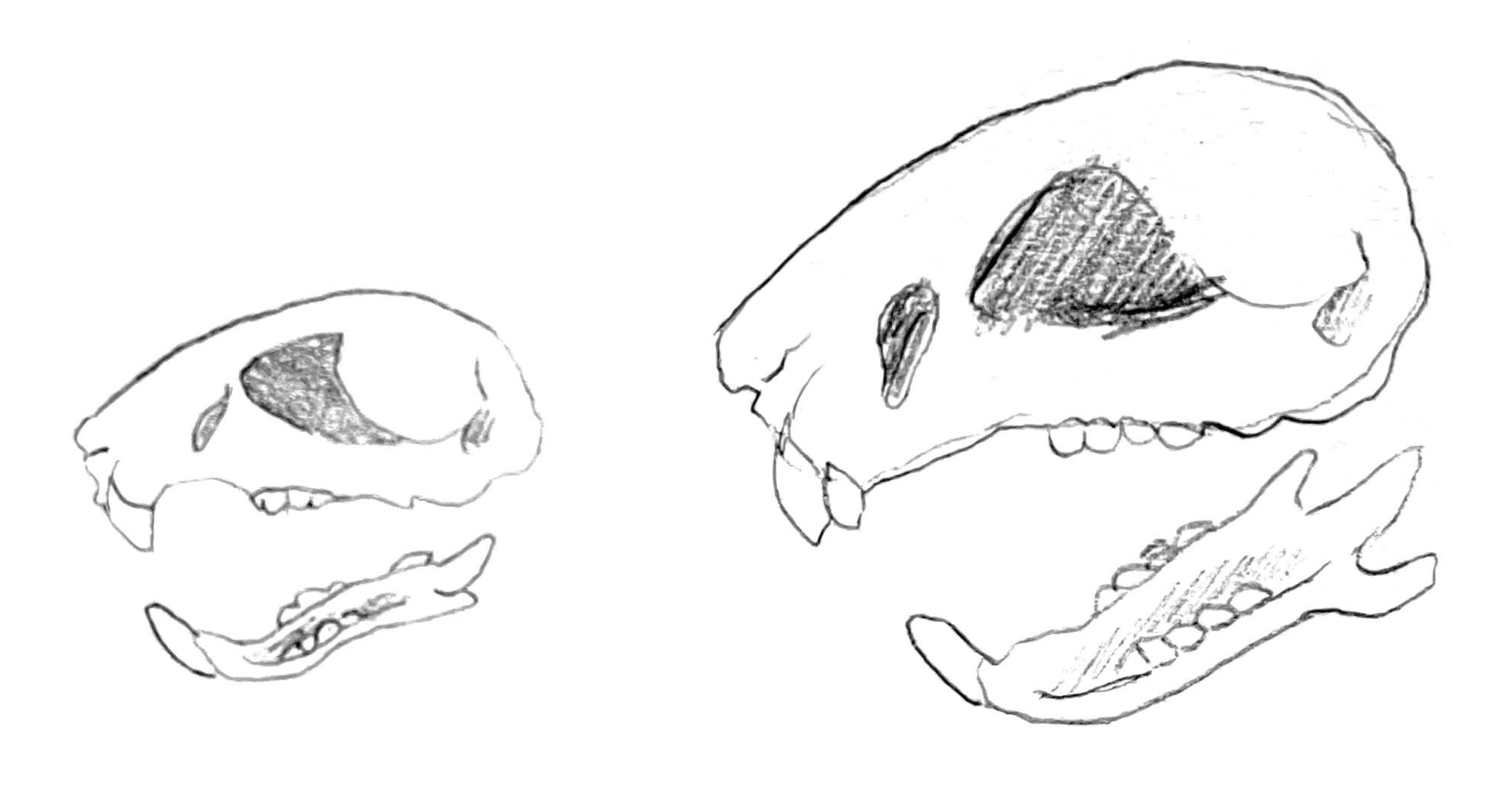
Diet: The majority of its diet consists of grass and larger leafy vegetations. Unlike its ancestor, it has no interest in eating insects.
Behaviour: It is diurnal, meaning it is awake during the day and asleep at night. It grazes during the warmest part of the day. It becomes more active as temperatures drop, foraging for other foods and patrolling its territory. It marks its territory with urine and feces, as well as rubbing its scent glands against objects. When it feels threatened, the tuft on its head bristles to appear larger.
This species is slightly more social than its ancestor. Male tufted hamsters have large territories that overlap the territories of several females. Females will occasionally share the same territory if resources are plentiful. Males will viciously defend their territory from other males.
It will dig out a shallow burrow to keep warm. It constructs a nest out of soft plants, moss, and fur.
Life Cycle & Reproduction: It lives an average of 2 years. During the breeding season, males will mate with multiple females and aggressively defend them from other males. Unlike the Campbell's dwarf, the male tufted hamster does not help care for his offspring. A female tufted hamster will typically give birth to 3 or 4 litters per year, with an average of 4 pups per litter. Pups are born hairless and pink.